
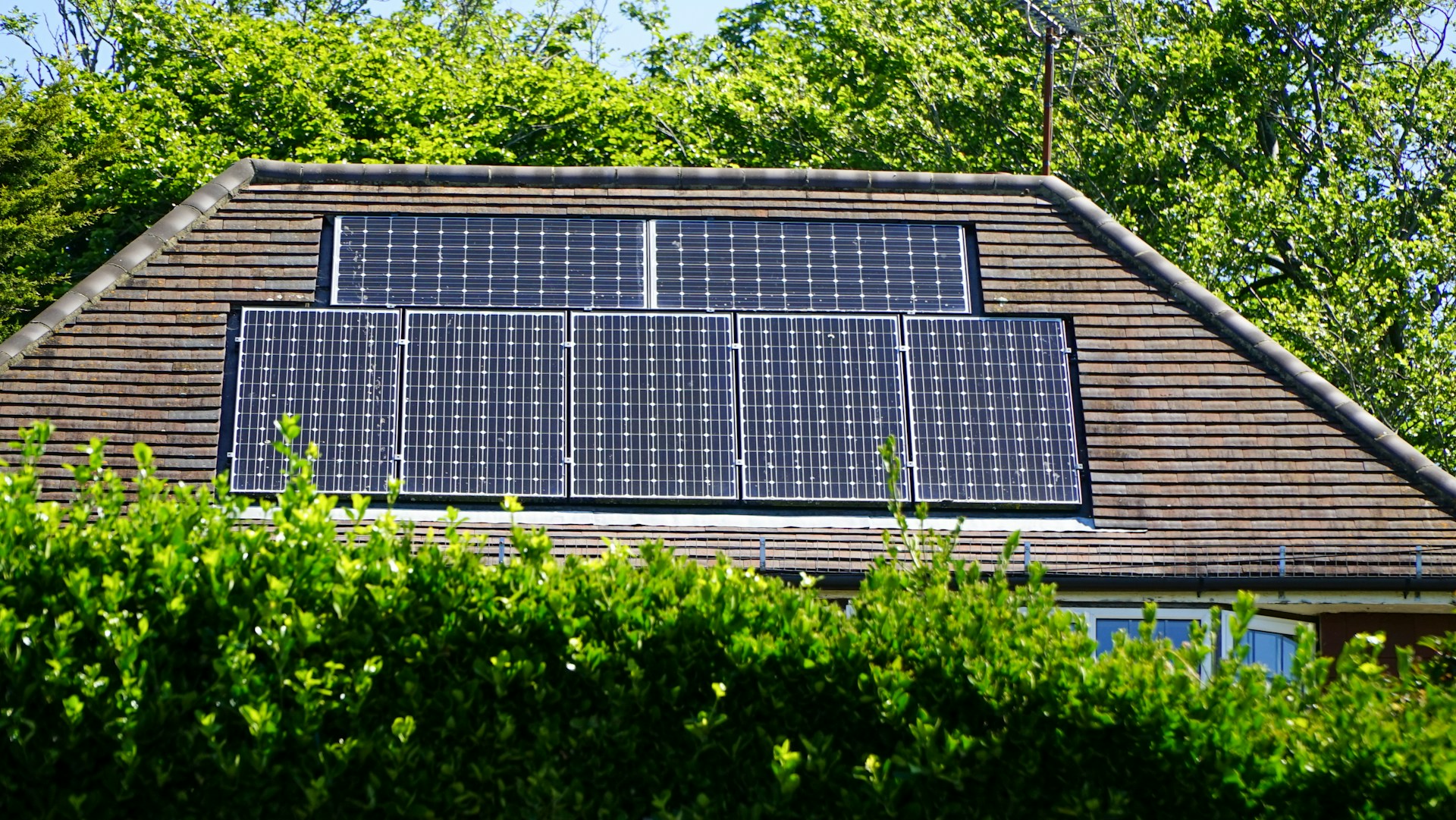
It’s a common belief that rain keeps solar panels clean. While rain can remove some loose dust, it does not properly clean panels and often leaves behind residue that affects performance.
Rainwater is not pure by the time it reaches your panels. It collects airborne pollutants, dust, pollen, soot, and industrial particles as it falls. Instead of cleaning the surface, it can spread this material into a thin film across the glass.
Dirt on solar panels also doesn’t easily wash away. Bird droppings, tree sap, and traffic pollution are sticky and often bond to the surface. These contaminants require more than water alone to remove effectively.
Light or intermittent rain can also cause a “cementing effect,” where dust becomes partially wet, then dries again, forming a harder layer that adheres more strongly to the panel surface. Panel angle also contributes—most systems are installed for energy efficiency, not self-cleaning, meaning water often streaks rather than fully rinsing the glass.
Even when panels appear clean after rain, a thin invisible film can remain. This layer reduces sunlight absorption and impacts efficiency over time.
To maintain optimal solar panel efficiency, mechanical agitation (scrubbing with a soft brush) combined with rinsing using pure water is required. This leaves the glass spotless and free of residue.
Performance losses can be significant: dust alone can reduce output by 20–30%, while heavily soiled panels with bird droppings have been shown to reduce efficiency by up to 50%.
Rain is therefore only a partial rinse—not a replacement for proper cleaning and maintenance.